
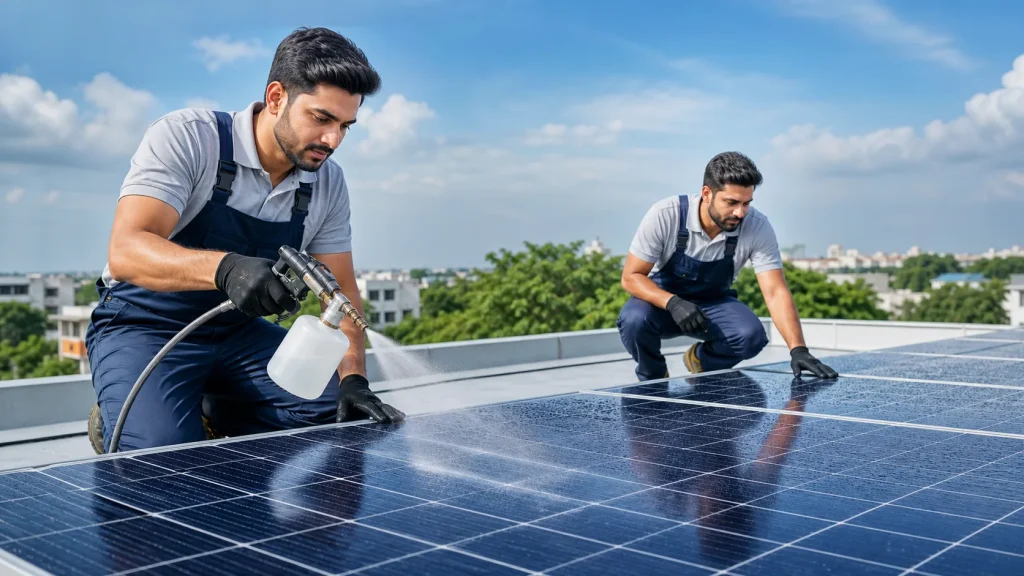
Restore Solar Output After the Monsoon
Late October is a sensible time for us to look closely at solar panels after months of rain, humidity, dust, and falling leaves. A panel may look clean from the ground, yet still carry a thin film of residue that affects how much light reaches the glass. Post-monsoon care helps you spot these issues early and prepare your system for the drier months ahead.
Across residential rooftops and commercial solar installations, we often see a mix of marks left behind by the season. Rain can wash loose dirt away, but it can also leave minerals, mud, and airborne pollution on the surface once the water dries.
Common concerns include:
- Water spots and mineral deposits on panel glass
- Mud splashes, dust films, and leaf residue
- Bird droppings and organic matter that cling to surfaces
- Moisture collecting around frames, seals, and mounting areas
Cleaning remains part of solar care, but occasional cleaning alone may not be enough for panels exposed to regular dust, pollution, or organic debris. We recommend treating surface protection as one part of a wider maintenance routine, alongside inspection, safe cleaning, and output monitoring.
Using a solar nano coating can support this routine by helping the glass stay easier to clean and reducing how firmly dirt and grime adhere between scheduled visits. It is not a shortcut around proper panel care, but it can make ongoing upkeep more manageable.
Why Monsoon Residue Reduces Panel Performance
Solar panels need clear access to sunlight. When dust, dirt, dried rainwater, or organic matter forms a layer on the glass, less light can pass through to the photovoltaic cells beneath. Even a light-looking haze can matter when it sits across a large section of the panel surface.
Monsoon weather can make this harder to manage. High humidity allows grime to settle and stick more firmly to glass. Mud splashes may dry into stubborn marks, while mineral-rich water can leave spots after evaporation. If these deposits are left for too long, routine cleaning may take more effort and surface care can become more demanding.
Panel output is not controlled by cleanliness alone. We also consider factors such as:
- The installation angle of the panels
- Shade from nearby trees, buildings, or new construction
- The condition of wiring, inverters, frames, and seals
- How regularly the system is inspected and cleaned
That is why we view surface care as one useful layer of protection for your solar investment, rather than a complete answer to every performance issue. A clean, well-maintained glass surface gives sunlight the best possible path, while inspections help identify concerns that cleaning cannot solve.
How Solar Nano Coating Supports Post-Monsoon Care
This protective treatment is made for solar panel glass surfaces. It is designed to support water repellence, easier cleaning, and reduced adherence of dust and grime. The treatment forms a very thin protective layer on the glass, helping water behave differently on the surface.
When applied correctly, a solar nano coating can encourage rainwater to bead and roll away more effectively. This may help limit water marks and reduce the build-up of loose dust, mud residue, and everyday grime between cleaning cycles. After the monsoon, that added surface support can be particularly useful while panels transition into dusty, dry conditions.
The practical benefits are straightforward. A protected surface may require less intensive cleaning, maintain a cleaner appearance, and make regular panel care more consistent. For larger systems, that can support a smoother maintenance plan where access and safe cleaning methods need careful attention.
Still, coatings are not magic. Their performance depends on correct surface preparation, proper application, local weather, the type of dirt present, and regular maintenance. We always recommend following the product instructions closely and keeping realistic expectations. A coating supports panel care, it does not remove the need for inspections or professional servicing.
Choosing the Right Time for Coating and Inspection
The post-monsoon period is well suited to inspection because the weather often becomes more stable and seasonal residue is easier to address before dry dust begins to build up. It gives us an opportunity to assess the panel surface, frames, and surrounding area after prolonged exposure to rain and moisture.
Before any solar nano coating is applied, the system should be checked for issues that need attention first. A protective treatment should only go onto clean, sound glass. Coating over damage, heavy dirt, or trapped moisture can work against the purpose of the treatment.
Preparation should include checking for:
- Cracks, chips, or visible damage to panel glass
- Loose wiring, worn seals, or moisture around frames
- Heavy debris, bird droppings, and stubborn mineral stains
- New shade caused by branches, nearby structures, or equipment
Panels should be thoroughly cleaned and fully dry before treatment. For rooftop systems, large commercial arrays, and difficult-to-access installations, we recommend using trained professionals who can inspect and clean the panels safely. This also helps prevent accidental damage to glass, wiring, and mounting hardware during the care process.
Building a Long-Term Solar Nano Coating Maintenance Plan
For long-term upkeep, a solar nano coating works best when it sits within a regular care plan. We encourage you to combine surface protection with visual checks, safe professional cleaning, trimming or reviewing nearby tree cover, and monitoring changes in energy output. The right schedule will depend on where your panels are installed and what they face each day.
Panels near construction activity, busy roads, industrial areas, coastal locations, or places with frequent bird activity may need closer attention. In these settings, dust, salt, pollution, and organic residue can collect more quickly. Protective coatings are an added layer of surface care, not a replacement for manufacturer-recommended maintenance or professional system servicing. By addressing post-monsoon residue now and keeping up with regular checks, you can help keep panel glass cleaner and make year-round upkeep easier.
Support Cleaner, Better-Protected Panel Glass
At Nanoman, we help homeowners choose surface-care solutions suited to their solar panels and local conditions. Discover how solar nano coating can support a cleaner glass surface between routine maintenance checks. For guidance on selecting the right coating approach for your system, contact us and our team will be happy to help.

